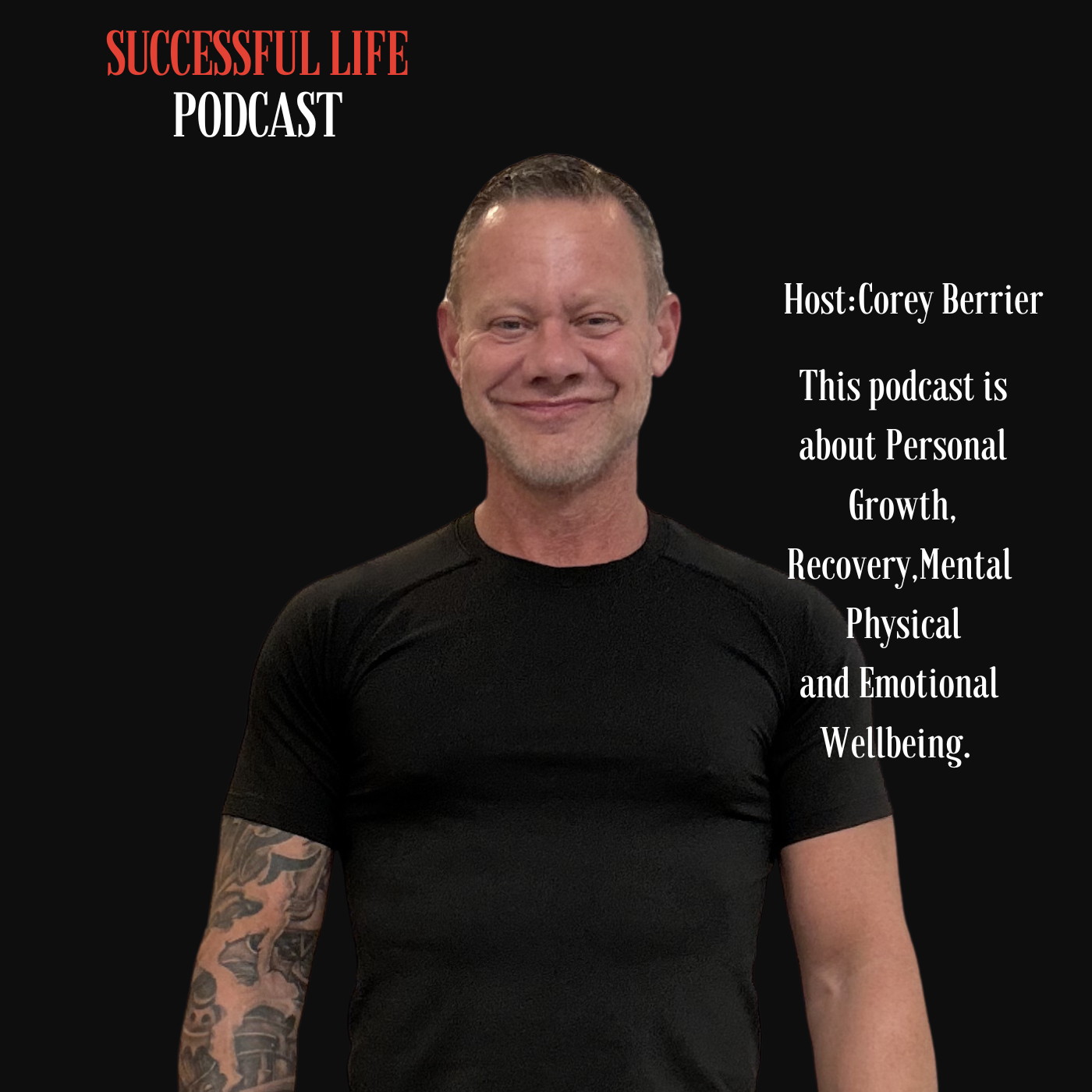


Grateful for Another Chance: When Hope Comes Back Into the Room
Show Notes
After more than a month of uncertainty, Corey shares his gratitude that his friend and sponsee Connor has resurfaced and that he has the chance to see him at his grandmother’s funeral. The relief comes alongside real grief for Connor’s family. Building on last week’s conversation about becoming a person of honesty and integrity, Corey reflects on the kind of gratitude that makes room for fear, loss, and unanswered questions. He also shares what it means to be sober and happy, to receive a second or third chance in life, and to show up for someone without trying to control their story.
Show notes
Last week, Corey talked about looking in the mirror and recognizing how recovery has changed him. A homeowner’s praise for Corey and his partner’s professionalism and trustworthiness reminded him that the work of recovery becomes visible in everyday life. This week, a very different moment asks him to live those same values: Connor has resurfaced after more than a month, and Corey has the opportunity to see him at his grandmother’s funeral.
Corey speaks honestly about the relief of hearing Connor has resurfaced while honoring the family’s loss. He considers what it means to offer care without needing an explanation or controlling what happens next. He also talks about how sobriety allows him to be present, how happiness can coexist with sorrow, and how a second or third chance becomes meaningful through everyday acts of honesty and service.
Connect with Corey


Successful Life Podcast
Show Transcript
CoreyBerrier 0:31
Welcome to the Successful Life Podcast. I'm your host, Corey Berrier. And today, just like every day, I'm super grateful to be completely sober. I say that at the beginning of every single episode, some because sometimes a person can say the same thing so many times that the words start to sound like an introduction.
But this week, I want to sit with those words for just a minute. I am grateful to be sober. I'm grateful to be happy. I'm grateful that my life has had a second chance and probably a third chance.
And if we're being honest, uh I'm just, God, it's probably a hundred chances. And I'm especially grateful for somebody I care about who has resurfaced. I talked about this gentleman not by name in a few episodes ago. And I talked about how we didn't know where he was.
And his name's Connor. And some of you may remember I talked about a friend, a sponsee who was missing, and I talked about his family and about the kind of fear that comes when somebody that you love disappears, and how and how mental health belongs in our conversations in recovery. And I thought about him and prayed for him. And now I can tell you that Connor has resurfaced this weekend.
I had a chance to see him at his grandmother's funeral. Made me think, I'm glad that we weren't there for his funeral. There's a lot to unpack there. There's a lot of relief because he has resurfaced.
Obviously, there's grief around him losing his grandmother, and but gratitude from my standpoint that I got to see him. And I don't want to turn their loss into some neat story with a perfect ending. A funeral is a time to honor somebody's life and support the people who loved her. And Connor's story belongs to Connor.
And I can tell you what this is brought up in, it's brought up in me, which I'm grateful for, and what I hope we can take into our own lives. And last week we talked about the person I see in the mirror. We talked about how recovery changes us and how integrity and honesty eventually become more than things we just say about ourselves. Other people can feel those things as well.
I told you about the homeowner that a retired military colonel who said he had seen plenty of roofers come by, and how he told my partner and I that we were the most professional, kind, and trustworthy people he had talked to. And that meant a great deal to me because years ago I couldn't look in the mirror and honestly say I like the person looking back. And this week, that mirror conversation has stayed with me. Who I am when I got when I get good news after a long stretch of fear, who I am when somebody I care about is hurting.
Am I the person that can show up and listen and make room for grief without making it about me? And can I recognize the life I've been given without pretending every part of it's easy? And that's what I want to talk to you today about is gratitude that has room for the whole truth. When Connor was missing, I didn't know what to do with that uncertainty.
And if you've ever waited, if you've ever waited for news about somebody you love, you know how your mind can run. You can replay the last conversation. You can replay what you said. You can think about could I have said one more thing or made one more phone call?
You hope every time the phone makes a noise that maybe this is the message you've been waiting for. And then you try to go about your day as a regular day because work still has to get done and people still need things from you. I remember talking to his dad about checking with the medical examiner. Just saying those words, it's hard to even say.
A parent should never have to make that call. And I can't speak for his family, and I won't pretend I know the full weight of what they carried. But hearing that made the situation to me so real in a way I haven't forgotten. This wasn't a conversation about recovery in the abstract.
This was a person I knew, a son, a friend, somebody whose absence left people looking for him. So when I heard from Connor, I first I heard that he had resurfaced. I felt grateful. I noticed that gratitude didn't erase everything else.
I didn't answer every question. It didn't undo the worry that had already happened. It didn't make a difficult family weekend simple. It gave me one solid thing I could say is I'm grateful he's resurfaced and I'm grateful for the chance to see him again.
I think sometimes we put too much pressure on good news. We want it to settle every fear immediately. We want to say, okay, now we're good, everything's fixed. But when someone has been missing for over a month, reconnecting can take patience.
The first thing doesn't have to be the biggest conversation in their life. Sometimes showing up and saying, I'm glad to see you is plenty enough. Sometimes you just need to let that person know that the door is still open without asking a bunch of freaking questions and giving them a timetable of when they need you want answers. And sometimes time takes time.
You know, and I need to be clear about something for myself. Gratitude isn't ownership. I can be thankful that Connor's resurfaced and still give him room to tell his own story or to keep it private. I can care about him without deciding I know exactly what he needs or what he doesn't.
If there's help I can offer, then I can offer it. If he needs space, I can respect that. Recovery has taught me that loving someone and controlling the outcome are two very different things. And I still have to practice that lesson.
This weekend at his grandmother's funeral. I went there with respect for the reason that everybody's there. Her family is grieving. My chance to see Connor matters deeply, but it doesn't make their grief a backdrop on my gratitude.
I can hold both feelings at once. I can be thankful to see him and be present for a family that has suffered a loss. Life doesn't wait for us to finish one feeling before it brings the next. I used to hear people talk about gratitude and think it meant being positive all the time.
Like I was grateful enough I wouldn't be afraid or I wouldn't be angry. I wouldn't grieve the things that didn't turn out the way I wanted. This is pretty, this is a pretty hard standard to live by. It can also keep you from telling the truth.
These days, gratitude sounds more honest to me. It can sound like I'm scared and I'm grateful to have somebody I can call. It can sound like I wish this family weren't going through a funeral, but and thankful that I get to see Connor and his family. It can sound like this has been a difficult week, but I'm still glad I woke up sober.
Those aren't contradictions. Two things can be trait, can be true at once, and that's just life. When I say I'm grateful to be sober, I'm not telling you that every morning I wake up singing or that I have an answer to everything that hurts. I'm saying that sobriety is giving me a way to be present in my own life.
I can answer the phone, I can keep an appointment, I can hear difficult news and stay available to the people who need me. I can feel something uncomfortable without having to reach for a drink or a drug to make that feeling stop. And for me, that's a big deal. There was a time when I couldn't be counted on the way I wanted to be counted on.
A lot of my energy went into trying to survive the damn mess that I made or trying to feel, trying not to feel it. And if you're in that place right now, I'm not saying that to shame you. I remember what it felt like to want out of my own head. I remember the loneliness.
And I know how simply telling somebody to be grateful enough isn't going to change their life. What helped me was doing things I didn't feel like doing, going to meetings, telling the truth, working the steps, calling people, listening, letting other people help me. Eventually I started to experience gratitude instead of just being told I should be experiencing gratitude. It really grew out of a life I was actually living.
The action came first a lot of the times, and that feeling caught up down the line. It wasn't immediate. And last week I said that the change shows up in the mirror and in the way other people experience us. That homeowner's words mattered because they reflect it, reflected the way I'm living and the way I've been practicing for years.
And gratitude has worked like that for me, anyway. I do practice paying attention. I notice that I have people to call. I notice that I can do my work and treat people decently.
I notice that I A message that somebody's resurfaced like Connor. I notice that I get another chance to show up, and over time, those changes are what I see. Maybe you've had a good thing happen this week and felt guilty because somebody else was hurting. Maybe you've had a terrible, you've gotten terrible news and wondered how anybody expects you to be grateful.
You do not have to choose one emotion and throw the rest away. You can tell the truth about what's hard and still make space for that one thing that's good. I talk about getting a second or a third chance in life because it feels accurate. If I go back through the years before I got sober, I can remember decisions that could have taken my life in a completely different direction.
I can remember those relationships I damaged the trust that I wasted. And the days I didn't see much good in the future. I didn't, I don't need to give you some dramatic version of this story. The plain version is enough.
I was lost, and people close to me were affected by it. And yet here I am sober. I can say that today I'm happy. I have work to do and people I care about.
I can look in the mirror and recognize the man looking back. None of that means that I've earned every good thing, or that every person I hurt owes me another chance. Some relationships take time to heal. Some may never look the way I hoped.
But a second chance is an opportunity to live differently, not a guarantee that everybody will forget what happened. I've talked about, I've talked before about my stepdaughter, and truly I never called her that. She was just my daughter. I made amends to her years ago, and then my ex-wife put a stop to that.
We went a long time without contact. And eventually I got that invitation to come see her theater performance, and we went and we got to see each other afterwards, and we hugged and we cried and could have never forced that moment into existence if I would have tried. I had to do the honest thing. I had to do the honest thing that I could, but let time pass and leave the rest of this is was out of my control.
I think about that now because it reminds me how small my plans can be. There were times I wanted a relationship repaired on my schedule. And there were times I wanted to know in advance that the phone call or the amends or the next honest step would pay off. But I just didn't get that kind of certainty.
But what I got was the chance to do the next right thing and then do it again. And at some point, an unexpected door opened. That doesn't mean every story follows the same path. I don't want to take the reunion with my daughter or this step, this chance to see Connor and turn it into a promise about how your life is going to work.
I can only share what it's taught me. People matter more than a timetable. Honesty matters even when I can't control when I can't see the reward. And I can hang on to hope without demanding an outcome.
Some of you have been given another chance after a relapse. Some of you have been given another chance in a marriage or a friendship or a job. And then some of you are still waiting. And you don't know whether that chance is coming.
And I want you to hear me say that your life is not over because the version of the plan fell apart, your version. A new start can be as small as answering a phone call, asking for help, walking into a room or making the apology you owe without attaching a demand to it. I give God the credit for the life I have today. I've said before that God's plan has a has been way bigger than the plan I kept trying to make for myself.
My part is to stay willing. I pray. I ask what I can do today, and then I try to follow through with that. I don't use faith as a way to explain somebody else's suffering or pretend I know why their family has been through what they've been through.
I use it to remember I'm not alone and that I don't have to be in charge of every outcome. Let's just talk about the word happy for a minute. I used to think happiness was an event. I'd get the job or get that relationship back or make enough money or finally prove something to somebody, and then I'd be happy.
I could relax. If I didn't feel happy after one of those things, I figured it must be the next thing. The happiness I have in sobriety is quieter than that, though. Some days it's the feeling of not having to hide.
Some days it's knowing I did what I said I would do. It's being able to take a hard phone call and then still go to work. It's meeting somebody where they are instead of deciding they need to respond the way I want them to. It's finishing a day and not having to craft a story about what I said or where I went.
I'm happy because I get to participate in my own life. And that doesn't mean I'm happy about every single circumstance. I'm certainly not happy that Connor's grandmother died. I can grieve with people.
I can be concerned about Connor, and I can be grateful that I'm sober enough to be there with an open heart. Those things can sit side by side. Last week I talked about that the retired colonel that, you know, telling my partner and myself that he trusted us. He didn't know my entire recovery story.
He saw what was in front of him and how we handled his roof and how we spoke to him and whether we seemed like people he could trust. That compliment meant a lot. But it also reminded me of the ordinary days behind it. It takes a lot of mundane, ordinary choices to become somebody who can show up that way.
It's the same with relationships. I can make a person trust me with I mean I can't make a person trust me with just one speech, or but I can be honest today. I can respect a boundary today. I can follow through today.
When another person is going through something painful, I can listen without trying to take over and control the conversation. That may not look like a grand recovery story, but it's how I want to live. And when I say I'm grateful for a second or third chance, I don't just mean I survived. I mean I get I get to use this life.
I get to be a friend, I get to be of service, I get to tell the truth in a recovery room and take the same honesty out into my business and my relationships. I don't have to be a different person in every room I walk into. And that, my friend, is freedom. You know, if you've been sober for a little while and you're waiting for happiness to arrive at some permanent feeling, maybe look at what's already different.
I mean, can you remember yesterday? The remember the day you decided to get sober. Is there somebody today you can tell the truth to? Did you keep a promise that the old you would have broken?
Did you sit through a feeling that once would have sent you running? Those things are easy to overlook because they don't come with a this big firework ending, but they're real. Over the last month, I could pray for him, I could care, I could stay in touch where it was appropriate, but I couldn't make him reappear by worrying hard enough. And that's a painful kind of powerlessness, especially for somebody like me who wants to fix things and control things.
And now that he's resurfaced, I still don't get to decide his next chapter. But I can decide how I show up when I see him. I can be kind, I can be present, I can remember that. This is his grandmother's funeral and his family's time to mourn.
I can let him know I care without making him responsible for easing my worry. If a conversation happens, I can listen more than I can talk. If all I get is a minute with him to say hello, I can be grateful for that. I think a lot of us in recovery need that reminder.
We want the people we love to be okay, and we want to know that they're okay right now. And we may have good reasons to worry, but if we arrive with an entire script for them to follow, they can feel that pressure. It's just like in a sales position. If I show up with the money on the mind, people can feel that.
Presence is more, can be more than just a perfect sales pitch or a perfect speech. The fact that somebody is willing to sit beside you and hear you and treat you like a person can matter a great deal. And this is especially true when someone is dealing with mental health struggles along with addiction. I said in an earlier episode that these conversations belong in the rooms.
We need to we need room to say I'm struggling and be met with somebody who cares. We also need to remember that recovery and professional care can work together. I don't have to pretend I can be somebody's doctor to be their friend or their sponsor. I can encourage help or take a phone call or offer a ride or but and stay honest with them about what I know and what I don't know.
I think about his family too, and the relief of them hearing from him after such a long period of worry and struggle. I can't fix that. I can honor them by treating their grief as a real thing, by praying for them, Not using detail, not using details that are not mine to share. Somebody listening may be waiting for news from a person right now.
And I don't I can't promise you when that phone's gonna ring or if it's gonna ring. But I can tell you what helped me stay grounded, and that's talking to other people. Staying sober today, doing the work right in front of me, and remembering that fear does not give me more control. If you're hurting right now, let somebody sit with you and talk with them.
You don't have to carry every hour of uncertainty by yourself. There's something practical I want you to try this week. Name name one second chance you've been given. My God, everybody's had one.
It might be a relationship or another sober morning or a conversation you didn't expect to have, or just the fact that you're here and can choose what you do next. Don't make it bigger than it is, just tell the truth about it. Then name one way you can honor that chance with a positive action. If you are truly grateful for your recovery, call another person in recovery and ask how they're doing and shut your mouth and listen.
If you're grateful for somebody that trusted you again, you know, just follow through on that next promise that you make. If you're grateful to be present for your family, put the phone down and be present. If you've been holding off asking for help, let somebody know where you're really at today. And maybe you don't feel grateful right now.
You don't have to force that feeling. Start with just an honest thing. Just say, I don't feel grateful. I feel scared, I'm angry, I'm exhausted.
Tell somebody who can hear it. Maybe the one thing you're grateful for today is that you found the courage to tell the truth. I've had days where that was enough. And last week's question was about who I see in the mirror after years of doing the work.
And this week's question is: what do I do with the life that person has given me? For me, the answer is to keep showing up. I want to use my second and third chance to be honest with people, to be of service, to love people without trying to determine their outcome. I'm grateful that Connor's resurfaced.
I'm grateful I had the chance to see him this weekend. I'm sorry for his family and their and the grandmother. And I pray that they have the support they need. And I'm grateful to be sober and happy today with a happiness that can hold that space.
I'm grateful God kept opening doors when I couldn't see the next one. And I'm grateful that the person looking back at me in the mirror is somebody who can who can show up in that moment. If you're living on a second chance, don't wait for that perfect moment to use it. Take an honest step today.
And if all you've got is enough strength to ask somebody to walk with you, that's an honest step too. So I appreciate you guys listening today. It means a lot that you tune in every single week and listen to the things that are on my mind and my heart. I'm grateful for that.
I'm grateful for you. And I ask that if you got something out of this episode, let somebody know. Send it to them. Maybe it'll change their day.
Like maybe it's changed yours, I hope. But we'll see you guys next week. Thanks for listening.
Also Listen
-
Who I See in the Mirror: How Recovery Changes a Person
What changes when you get sober beyond putting down the drink? Corey Berrier ref
-
When I Let Go, God Made Room for More
Last week Corey Berrier shared the unexpected invitation to attend his stepdaugh
-
Time Takes Time: Honesty When the Outcome Is Out of Your Hands
Three years ago, Corey Berrier made amends to his stepdaughter. Shortly afterwar
Transcript
CoreyBerrier 0:31 Welcome to the Successful Life Podcast. I'm your host, Corey Berrier. And today, just like every day, I'm super grateful to be completely sober. I say that at the beginning of every single episode, some because sometimes a person can say the same thing so many times that the words start to sound like an introduction.
But this week, I want to sit with those words for just a minute. I am grateful to be sober. I'm grateful to be happy. I'm grateful that my life has had a second chance and probably a third chance.
And if we're being honest, uh I'm just, God, it's probably a hundred chances. And I'm especially grateful for somebody I care about who has resurfaced. I talked about this gentleman not by name in a few episodes ago. And I talked about how we didn't know where he was.
And his name's Connor. And some of you may remember I talked about a friend, a sponsee who was missing, and I talked about his family and about the kind of fear that comes when somebody that you love disappears, and how and how mental health belongs in our conversations in recovery. And I thought about him and prayed for him. And now I can tell you that Connor has resurfaced this weekend.
I had a chance to see him at his grandmother's funeral. Made me think, I'm glad that we weren't there for his funeral. There's a lot to unpack there. There's a lot of relief because he has resurfaced.
Obviously, there's grief around him losing his grandmother, and but gratitude from my standpoint that I got to see him. And I don't want to turn their loss into some neat story with a perfect ending. A funeral is a time to honor somebody's life and support the people who loved her. And Connor's story belongs to Connor.
And I can tell you what this is brought up in, it's brought up in me, which I'm grateful for, and what I hope we can take into our own lives. And last week we talked about the person I see in the mirror. We talked about how recovery changes us and how integrity and honesty eventually become more than things we just say about ourselves. Other people can feel those things as well.
I told you about the homeowner that a retired military colonel who said he had seen plenty of roofers come by, and how he told my partner and I that we were the most professional, kind, and trustworthy people he had talked to. And that meant a great deal to me because years ago I couldn't look in the mirror and honestly say I like the person looking back. And this week, that mirror conversation has stayed with me. Who I am when I got when I get good news after a long stretch of fear, who I am when somebody I care about is hurting.
Am I the person that can show up and listen and make room for grief without making it about me? And can I recognize the life I've been given without pretending every part of it's easy? And that's what I want to talk to you today about is gratitude that has room for the whole truth. When Connor was missing, I didn't know what to do with that uncertainty.
And if you've ever waited, if you've ever waited for news about somebody you love, you know how your mind can run. You can replay the last conversation. You can replay what you said. You can think about could I have said one more thing or made one more phone call?
You hope every time the phone makes a noise that maybe this is the message you've been waiting for. And then you try to go about your day as a regular day because work still has to get done and people still need things from you. I remember talking to his dad about checking with the medical examiner. Just saying those words, it's hard to even say.
A parent should never have to make that call. And I can't speak for his family, and I won't pretend I know the full weight of what they carried. But hearing that made the situation to me so real in a way I haven't forgotten. This wasn't a conversation about recovery in the abstract.
This was a person I knew, a son, a friend, somebody whose absence left people looking for him. So when I heard from Connor, I first I heard that he had resurfaced. I felt grateful. I noticed that gratitude didn't erase everything else.
I didn't answer every question. It didn't undo the worry that had already happened. It didn't make a difficult family weekend simple. It gave me one solid thing I could say is I'm grateful he's resurfaced and I'm grateful for the chance to see him again.
I think sometimes we put too much pressure on good news. We want it to settle every fear immediately. We want to say, okay, now we're good, everything's fixed. But when someone has been missing for over a month, reconnecting can take patience.
The first thing doesn't have to be the biggest conversation in their life. Sometimes showing up and saying, I'm glad to see you is plenty enough. Sometimes you just need to let that person know that the door is still open without asking a bunch of freaking questions and giving them a timetable of when they need you want answers. And sometimes time takes time.
You know, and I need to be clear about something for myself. Gratitude isn't ownership. I can be thankful that Connor's resurfaced and still give him room to tell his own story or to keep it private. I can care about him without deciding I know exactly what he needs or what he doesn't.
If there's help I can offer, then I can offer it. If he needs space, I can respect that. Recovery has taught me that loving someone and controlling the outcome are two very different things. And I still have to practice that lesson.
This weekend at his grandmother's funeral. I went there with respect for the reason that everybody's there. Her family is grieving. My chance to see Connor matters deeply, but it doesn't make their grief a backdrop on my gratitude.
I can hold both feelings at once. I can be thankful to see him and be present for a family that has suffered a loss. Life doesn't wait for us to finish one feeling before it brings the next. I used to hear people talk about gratitude and think it meant being positive all the time.
Like I was grateful enough I wouldn't be afraid or I wouldn't be angry. I wouldn't grieve the things that didn't turn out the way I wanted. This is pretty, this is a pretty hard standard to live by. It can also keep you from telling the truth.
These days, gratitude sounds more honest to me. It can sound like I'm scared and I'm grateful to have somebody I can call. It can sound like I wish this family weren't going through a funeral, but and thankful that I get to see Connor and his family. It can sound like this has been a difficult week, but I'm still glad I woke up sober.
Those aren't contradictions. Two things can be trait, can be true at once, and that's just life. When I say I'm grateful to be sober, I'm not telling you that every morning I wake up singing or that I have an answer to everything that hurts. I'm saying that sobriety is giving me a way to be present in my own life.
I can answer the phone, I can keep an appointment, I can hear difficult news and stay available to the people who need me. I can feel something uncomfortable without having to reach for a drink or a drug to make that feeling stop. And for me, that's a big deal. There was a time when I couldn't be counted on the way I wanted to be counted on.
A lot of my energy went into trying to survive the damn mess that I made or trying to feel, trying not to feel it. And if you're in that place right now, I'm not saying that to shame you. I remember what it felt like to want out of my own head. I remember the loneliness.
And I know how simply telling somebody to be grateful enough isn't going to change their life. What helped me was doing things I didn't feel like doing, going to meetings, telling the truth, working the steps, calling people, listening, letting other people help me. Eventually I started to experience gratitude instead of just being told I should be experiencing gratitude. It really grew out of a life I was actually living.
The action came first a lot of the times, and that feeling caught up down the line. It wasn't immediate. And last week I said that the change shows up in the mirror and in the way other people experience us. That homeowner's words mattered because they reflect it, reflected the way I'm living and the way I've been practicing for years.
And gratitude has worked like that for me, anyway. I do practice paying attention. I notice that I have people to call. I notice that I can do my work and treat people decently.
I notice that I A message that somebody's resurfaced like Connor. I notice that I get another chance to show up, and over time, those changes are what I see. Maybe you've had a good thing happen this week and felt guilty because somebody else was hurting. Maybe you've had a terrible, you've gotten terrible news and wondered how anybody expects you to be grateful.
You do not have to choose one emotion and throw the rest away. You can tell the truth about what's hard and still make space for that one thing that's good. I talk about getting a second or a third chance in life because it feels accurate. If I go back through the years before I got sober, I can remember decisions that could have taken my life in a completely different direction.
I can remember those relationships I damaged the trust that I wasted. And the days I didn't see much good in the future. I didn't, I don't need to give you some dramatic version of this story. The plain version is enough.
I was lost, and people close to me were affected by it. And yet here I am sober. I can say that today I'm happy. I have work to do and people I care about.
I can look in the mirror and recognize the man looking back. None of that means that I've earned every good thing, or that every person I hurt owes me another chance. Some relationships take time to heal. Some may never look the way I hoped.
But a second chance is an opportunity to live differently, not a guarantee that everybody will forget what happened. I've talked about, I've talked before about my stepdaughter, and truly I never called her that. She was just my daughter. I made amends to her years ago, and then my ex-wife put a stop to that.
We went a long time without contact. And eventually I got that invitation to come see her theater performance, and we went and we got to see each other afterwards, and we hugged and we cried and could have never forced that moment into existence if I would have tried. I had to do the honest thing. I had to do the honest thing that I could, but let time pass and leave the rest of this is was out of my control.
I think about that now because it reminds me how small my plans can be. There were times I wanted a relationship repaired on my schedule. And there were times I wanted to know in advance that the phone call or the amends or the next honest step would pay off. But I just didn't get that kind of certainty.
But what I got was the chance to do the next right thing and then do it again. And at some point, an unexpected door opened. That doesn't mean every story follows the same path. I don't want to take the reunion with my daughter or this step, this chance to see Connor and turn it into a promise about how your life is going to work.
I can only share what it's taught me. People matter more than a timetable. Honesty matters even when I can't control when I can't see the reward. And I can hang on to hope without demanding an outcome.
Some of you have been given another chance after a relapse. Some of you have been given another chance in a marriage or a friendship or a job. And then some of you are still waiting. And you don't know whether that chance is coming.
And I want you to hear me say that your life is not over because the version of the plan fell apart, your version. A new start can be as small as answering a phone call, asking for help, walking into a room or making the apology you owe without attaching a demand to it. I give God the credit for the life I have today. I've said before that God's plan has a has been way bigger than the plan I kept trying to make for myself.
My part is to stay willing. I pray. I ask what I can do today, and then I try to follow through with that. I don't use faith as a way to explain somebody else's suffering or pretend I know why their family has been through what they've been through.
I use it to remember I'm not alone and that I don't have to be in charge of every outcome. Let's just talk about the word happy for a minute. I used to think happiness was an event. I'd get the job or get that relationship back or make enough money or finally prove something to somebody, and then I'd be happy.
I could relax. If I didn't feel happy after one of those things, I figured it must be the next thing. The happiness I have in sobriety is quieter than that, though. Some days it's the feeling of not having to hide.
Some days it's knowing I did what I said I would do. It's being able to take a hard phone call and then still go to work. It's meeting somebody where they are instead of deciding they need to respond the way I want them to. It's finishing a day and not having to craft a story about what I said or where I went.
I'm happy because I get to participate in my own life. And that doesn't mean I'm happy about every single circumstance. I'm certainly not happy that Connor's grandmother died. I can grieve with people.
I can be concerned about Connor, and I can be grateful that I'm sober enough to be there with an open heart. Those things can sit side by side. Last week I talked about that the retired colonel that, you know, telling my partner and myself that he trusted us. He didn't know my entire recovery story.
He saw what was in front of him and how we handled his roof and how we spoke to him and whether we seemed like people he could trust. That compliment meant a lot. But it also reminded me of the ordinary days behind it. It takes a lot of mundane, ordinary choices to become somebody who can show up that way.
It's the same with relationships. I can make a person trust me with I mean I can't make a person trust me with just one speech, or but I can be honest today. I can respect a boundary today. I can follow through today.
When another person is going through something painful, I can listen without trying to take over and control the conversation. That may not look like a grand recovery story, but it's how I want to live. And when I say I'm grateful for a second or third chance, I don't just mean I survived. I mean I get I get to use this life.
I get to be a friend, I get to be of service, I get to tell the truth in a recovery room and take the same honesty out into my business and my relationships. I don't have to be a different person in every room I walk into. And that, my friend, is freedom. You know, if you've been sober for a little while and you're waiting for happiness to arrive at some permanent feeling, maybe look at what's already different.
I mean, can you remember yesterday? The remember the day you decided to get sober. Is there somebody today you can tell the truth to? Did you keep a promise that the old you would have broken?
Did you sit through a feeling that once would have sent you running? Those things are easy to overlook because they don't come with a this big firework ending, but they're real. Over the last month, I could pray for him, I could care, I could stay in touch where it was appropriate, but I couldn't make him reappear by worrying hard enough. And that's a painful kind of powerlessness, especially for somebody like me who wants to fix things and control things.
And now that he's resurfaced, I still don't get to decide his next chapter. But I can decide how I show up when I see him. I can be kind, I can be present, I can remember that. This is his grandmother's funeral and his family's time to mourn.
I can let him know I care without making him responsible for easing my worry. If a conversation happens, I can listen more than I can talk. If all I get is a minute with him to say hello, I can be grateful for that. I think a lot of us in recovery need that reminder.
We want the people we love to be okay, and we want to know that they're okay right now. And we may have good reasons to worry, but if we arrive with an entire script for them to follow, they can feel that pressure. It's just like in a sales position. If I show up with the money on the mind, people can feel that.
Presence is more, can be more than just a perfect sales pitch or a perfect speech. The fact that somebody is willing to sit beside you and hear you and treat you like a person can matter a great deal. And this is especially true when someone is dealing with mental health struggles along with addiction. I said in an earlier episode that these conversations belong in the rooms.
We need to we need room to say I'm struggling and be met with somebody who cares. We also need to remember that recovery and professional care can work together. I don't have to pretend I can be somebody's doctor to be their friend or their sponsor. I can encourage help or take a phone call or offer a ride or but and stay honest with them about what I know and what I don't know.
I think about his family too, and the relief of them hearing from him after such a long period of worry and struggle. I can't fix that. I can honor them by treating their grief as a real thing, by praying for them, Not using detail, not using details that are not mine to share. Somebody listening may be waiting for news from a person right now.
And I don't I can't promise you when that phone's gonna ring or if it's gonna ring. But I can tell you what helped me stay grounded, and that's talking to other people. Staying sober today, doing the work right in front of me, and remembering that fear does not give me more control. If you're hurting right now, let somebody sit with you and talk with them.
You don't have to carry every hour of uncertainty by yourself. There's something practical I want you to try this week. Name name one second chance you've been given. My God, everybody's had one.
It might be a relationship or another sober morning or a conversation you didn't expect to have, or just the fact that you're here and can choose what you do next. Don't make it bigger than it is, just tell the truth about it. Then name one way you can honor that chance with a positive action. If you are truly grateful for your recovery, call another person in recovery and ask how they're doing and shut your mouth and listen.
If you're grateful for somebody that trusted you again, you know, just follow through on that next promise that you make. If you're grateful to be present for your family, put the phone down and be present. If you've been holding off asking for help, let somebody know where you're really at today. And maybe you don't feel grateful right now.
You don't have to force that feeling. Start with just an honest thing. Just say, I don't feel grateful. I feel scared, I'm angry, I'm exhausted.
Tell somebody who can hear it. Maybe the one thing you're grateful for today is that you found the courage to tell the truth. I've had days where that was enough. And last week's question was about who I see in the mirror after years of doing the work.
And this week's question is: what do I do with the life that person has given me? For me, the answer is to keep showing up. I want to use my second and third chance to be honest with people, to be of service, to love people without trying to determine their outcome. I'm grateful that Connor's resurfaced.
I'm grateful I had the chance to see him this weekend. I'm sorry for his family and their and the grandmother. And I pray that they have the support they need. And I'm grateful to be sober and happy today with a happiness that can hold that space.
I'm grateful God kept opening doors when I couldn't see the next one. And I'm grateful that the person looking back at me in the mirror is somebody who can who can show up in that moment. If you're living on a second chance, don't wait for that perfect moment to use it. Take an honest step today.
And if all you've got is enough strength to ask somebody to walk with you, that's an honest step too. So I appreciate you guys listening today. It means a lot that you tune in every single week and listen to the things that are on my mind and my heart. I'm grateful for that.
I'm grateful for you. And I ask that if you got something out of this episode, let somebody know. Send it to them. Maybe it'll change their day.
Like maybe it's changed yours, I hope. But we'll see you guys next week. Thanks for listening.
Comments & Upvotes