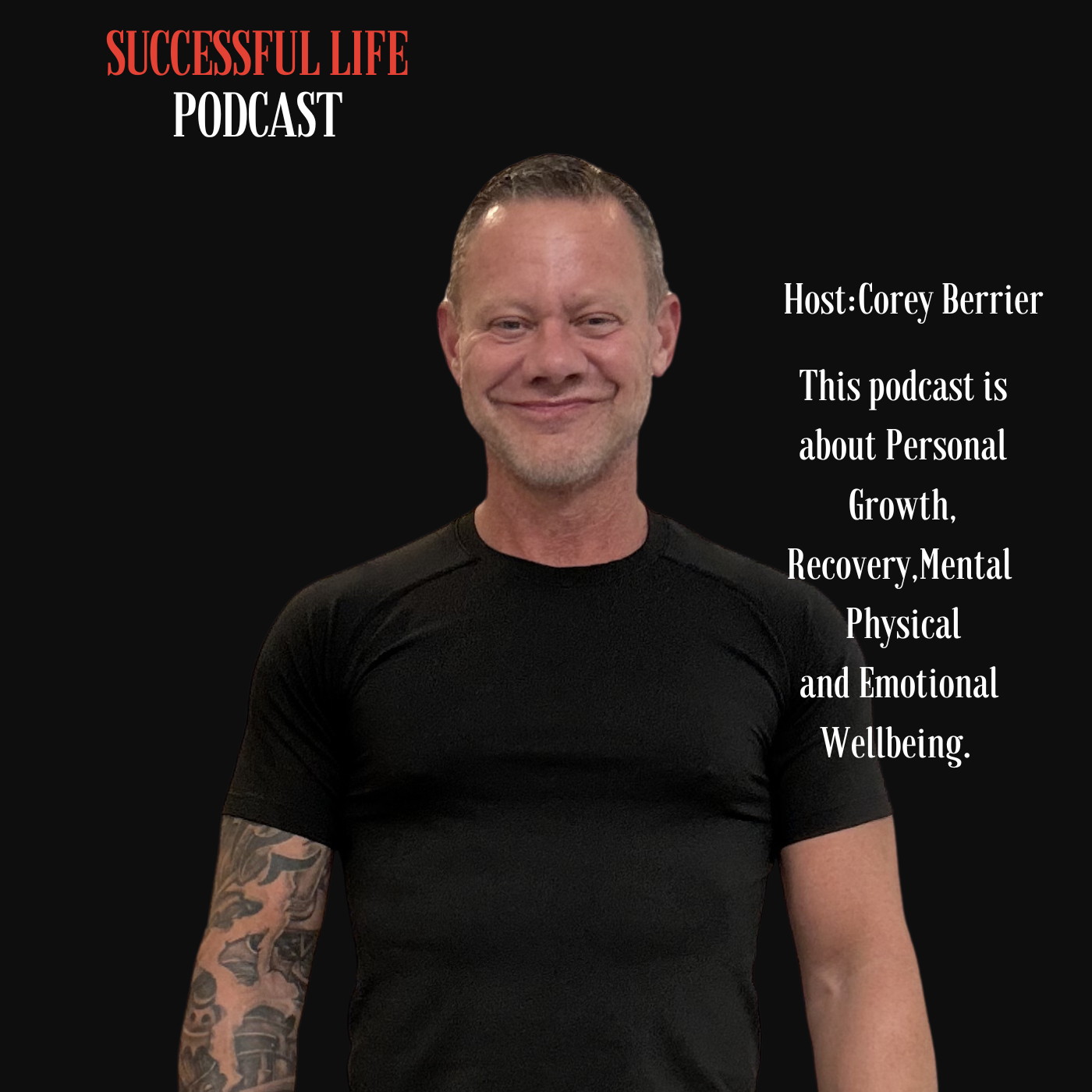


Prayer, Meditation, and Letting Go of Control
Show Notes
Corey Berrier used to think his racing ADHD mind would never let him sit in silence for twenty minutes, much less do it twice a day. Then he went to meet a Transcendental Meditation teacher. He arrived highly upset and left an hour later feeling calm and serene. In this episode of the Successful Life Podcast, Corey shares how practicing TM and prayer has helped him live Step Eleven, feel more spiritually connected, and let go of the need to direct everybody else’s part in his life. From a driver cutting him off to an insurance decision he can’t make for someone else, he shares what it looks like to do his part and leave the outcome with God.
SHOW NOTES
What changes when you stop needing to know how everything will turn out? Corey talks about trying candle meditation, YouTube tracks, guided meditations, and recordings without words before finding a practice he could stick with. He shares his initial skepticism about spending forty minutes a day meditating and what convinced him to keep coming back: he could see the difference in how he responded to people and situations outside the chair.
Corey also explains what prayer sounds like for him today. He talks about asking God for help seeing what’s his to do, giving other people room to make their own choices, and staying present when plans change. He closes with a simple exercise: name one outcome you’re trying to control, identify one action that’s yours to take, and ask for help letting go of the rest.
If you missed last week’s episode, “Grateful for Another Chance: When Hope Comes Back Into the Room,” go back and listen for Corey’s reflections on Connor resurfacing, being sober and happy, and receiving another chance in life.
Connect with Corey


Successful Life Podcast
Show Transcript
CoreyBerrier 0:31
Welcome to the Successful Life Podcast. I'm your host, Corey Berrier, and today, just like every day, I'm super grateful to be completely sober. Last week I talked about gratitude, about Connor resurfacing after being missing for over a month, and about being grateful for second and third chances that I've been given personally in this life. If you haven't listened to Grateful for Another Chance, go back and give it a listen whenever you're done listening to this one.
Today I'm going to talk to you about something that's helped me really live in gratitude, which is prayer and meditation. Prayer meditation is it's well, it's one of the parts, it's one of the 12 steps. It's the 11th step. And for a long time I heard those words and thought, yeah, they sound good, but I really had no idea how much they could change my day-to-day life.
I thought I had to find a way to make my mind quiet before I could meditate. I'm just curious if you've ever tried to make your mind quiet on command. Good luck with that. Because especially if your brain works anything like mine, prayer meditation has helped my ADHD.
Obviously, I have ADHD. My mind can get going before my feet even hit the floor. And I think about I think about the call I need to make or the roof I need to inspect or the person I need to text, the thing that I should have said yesterday, or what might happen three weeks from now, and all of that before 6 a.m. The idea of sitting still for 20 minutes sounded impossible.
And doing it twice a day sounded absolutely freaking ridiculous. And then you've got prayer. I believed in God, and but sometimes my prayers sound like a whole like like a like instructions. God help this person, See it my way.
Please let this job work out exactly the way I planned. Make this phone call go the way I want it to go. I would say I was turning things over and then spend the rest of the day trying to manage every single detail myself. Maybe you know what that feels like.
I don't know. You're doing the right, if you're doing the right things in recovery, but your head is still directing the entire show. You want to know the outcome before you'll take the action. You stay busy so you're never so you never really have to sit alone with yourself.
Somebody cuts you off in traffic and your whole body reacts as if they did it personally to you. Well, that was me. Today I'm going to tell you what changed, what I practice, and what I'm still learning about letting God direct my life. And before I found a practice, I could stick with, I tried a lot of different kinds of meditation.
I've sat in a room looking at a candle. I've put meditation music on from YouTube. I've tried guided meditations where somebody talks you through it. I've tried recordings without any words at all.
Some of them helped for a while. Sometimes I'd get distracted and feel like I was doing it wrong. Then I'd just decide, fuck it, it really wasn't for me. You know, I think a lot of us do that with anything new in recovery.
We try it once or twice and immediately measure the results. Was it peaceful? Did it the thought go away? Am I a different person?
And if the answer is no, we move on. And that's what I did with meditation. I was treating it like a light switch that I could just flip on and off, sit down for a few minutes, get up, and never have a racing thought again, is what I thought. What I didn't really understand was that practice could still matter even if my mind wandered, especially having ADHD.
I had to stop using my mind is busy as proof that I couldn't do it. I didn't have to win an argument with every thought in my head to be to begin meditating. There was something else underneath that resistance. If I stayed busy, I could feel productive.
If I was answering texts, making plans, driving somewhere, helping somebody and work or working on the next roof. I I didn't have to notice what was happening inside of me. You know, sitting down with no task felt uncomfortable. I told myself I didn't have time to meditate, but I could find plenty of time to replay a conversation for an hour or worry about an outcome that I had no control over.
And I want to be transparent here. I still have work to do. I haven't arrived. If I'm going to inspect a roof, I need to know whether it's safe or whether it's not safe.
If I have a customer waiting on an answer, I need to follow through. I need to plan my day. And that part, the part really the part that wears me out is when I try to live in the next six months in my head before I even leave the house. And at one point I had to ask myself, how is all this mental activity serving me?
Some of it helped me make good decisions. A whole lot of it was me trying to feel certain. And certainty wasn't showing up no matter how hard I chased it. Well, last November I went to meet with a transcendental meditation teacher.
People usually call it TM. I didn't walk in there feeling calm and spiritually connected, I can tell you that. In fact, I was highly upset before I got there. I got a phone call from a guy that pissed me off.
I mean, he just pissed me off. And you may have those days like myself where you're carrying around a situation in your head and your chest, and you're trying to feel yourself gripping it. That's where I was. And I really didn't have any expectations.
So an hour later, after I left this guy's house, I felt completely calm and serene. And I remember noticing the difference in thinking, and I just thought, what just happened? Even then I had already had an argument. 20 minutes twice a day, that's 40 minutes.
I thought there was no possible way sitting for that long would be worth the time. I mean, I'm busy. I got a lot of stuff going on. And my mind told me the same thing.
It told me I could get more done if I skipped it. And it told me that with my race, my brain racing like it does, I'd never be able to sit in silence for 20 minutes at a time. And if you've listened to this show for a while, you may hear a familiar pattern. I want to know the outcome before I start.
I want to be good at the thing before I practice the thing. Well, that doesn't work very well in recovery. It didn't work well here either. I had to give the practice a real chance.
Even with the doubts that I had about it and the restless thoughts, I began sitting for 20 minutes a day, twice a day. And there were days when it was easy to make the time and days when it wasn't. I didn't suddenly become a man who never had a thought. I still, I still have a brain, I still have a mind.
Sometimes it races. Sometimes I realize I've been thinking about work or a relationship or what I'm going to eat later, but I keep coming back to the practice. The point for me has been the consistency and what that consistency has done in the rest of my life. Over time, I noticed I was just calmer.
I could be in the middle of an uncertain situation and give it some time instead of trying to force an answer. I could hear something I didn't like without automatically getting defensive. I felt more present with the person in front of me. And spiritually, I felt more connected than ever.
When that change showed up outside of me meditating, it showed up at a stoplight or on a sales call or in a conversation I might have tried to control in the past. And a few seconds before feeling in my reaction, that's where I begin to understand why these 40 minutes mattered. And for an alcoholic like me, control used to be paramount. I wanted to direct people, places, things.
I wanted to know what everybody was going to do and how it would affect me. If I was making a decision, I wanted a guarantee that it would turn out the way I wanted. I could call it being responsible or thinking ahead. And sometimes it really was.
Sometimes I was afraid. But having a plan for everybody else made me feel less afraid. Have you ever caught yourself trying to direct the entire show? And the show is your life.
And everybody else has a part that they are apparently supposed to play. Your partner needs to respond a certain way. A customer needs to make a decision by Friday. The insurance adjuster needs to see what I see on the roof.
The friend you help needs to take your advice. And if any of these people do anything differently, then there goes my peace. I know that feeling. I've talked about it on this podcast without expect without expecting an adjuster to inspect a roof and say exactly what I thought he would say.
I could spend days anticipating the result and then get an angry and then get pissed off when the actual person did his actual job in a way that I didn't expect. Meditation has helped me notice that my impulses. Now, and I catch those things quicker than normal. Prayer helps me figure out what to do with all that.
And I can prepare the information. I can be honest with the homeowner. I can show up on time and I can do my part. I can't make the adjuster or the insurance company think what I think.
I can't control the their decisions. And I don't need to spend all day rehearsing a fight with somebody else that hasn't even happened yet. When I say I no longer need to control everything, I still have responsibilities. I need to make calls, I need to pay bills, I need to keep commitments, I need to use good judgment.
But what's changed is if I I don't have to manage other people's minds or demand a guarantee, guaranteed outcome to feel okay. I could take responsibility for my actions and give other people room to make their own decisions. I say it to myself like this: if I can't touch it with my hands, I probably don't control it the way I think I do. Like if I can put my hands on it, I can I have a little bit of control over it.
I can pick up the phone and make the call. I can help set up the meeting. I can apologize, I can make an amendment, I can show up for somebody. But I can't reach into another person's head and make them approve of me or agree with me for that matter.
I have I have to just roll with the plan. And you know something? There's relief in that. I spent so much energy trying to hold things together that were never mine to hold.
I don't have to carry every possible outcome around in my body all day. I can do my part, ask for help, and let God handle what I can't. It's a serenity prayer. God grant me the serenity to accept the things I cannot change, the courage to change the things I can, and the wisdom to know the difference.
And here's a simple example, and I bet some of you will probably recognize this. Somebody cut you off in traffic. There was a time when I would take that personally in a split second. Who the F does this guy think he is?
He could he put me in danger. He doesn't care about anybody but himself. Maybe I would even cuss this guy out. Even after the car was gone, I could carry that anger for miles down the road.
But don't get me wrong, driving safely matters. But if somebody moves into my lane, I break, leave space, and pay attention. I just after I've responded to what actually happened, I have a choice about that story I tell. I don't know what's going on in their life.
I don't know if they're distracted, late, on the phone, frightened. Who knows? It could just be a simple carelessness. I try to drive pretty safely.
I need to spend, but I what I don't need to do is spend the next half an hour or hour arguing with somebody who's been gone for that long. Complete freaking stranger. And for me, the key word there is in that first angry story was me. That's the key word.
In quotations, me. He did that to me. He disrespected me. He made me, he made my day harder.
Once I start looking at every moment through the lens of what I'm not getting or what I deserve or how somebody has inconvenienced me, I can create a lot of chaos in my own head. Nobody else even has to be there for it. TM has helped me slow down enough to catch that story sometimes. I can notice there I go again, making this all about me.
I can take a breath, let the card go, and get back on the road. The situation's over. I don't have to bring it into my next conversation or let it decide my mood for that day. That carries, that carries over to bigger things for me anyway.
If somebody doesn't call me back, maybe they have something going on. If a person at a meeting seems distant or they're not paying attention, maybe their day's been a difficult day. If a customer needs time, maybe they're making a decision about their home and their money, and they just want to think it through. But I don't know that until I ask.
And sometimes I don't really need to know the answer. The more I can try to see life from another person's point of view, the easier my day becomes. Everybody's going through something. You, me, most of the time.
Whatever they're going through has nothing to do with me. And when I leave space for that, I get to spend a little bit more of my day listening and a little less of it taking things personally. Meditation has helped me pause. Prayers helped me remember that I need help.
And I mean that plainly. I need help. I can't think my way into managing every relationship or every outcome. When I rely on myself, it can get very loud in this brain.
But when I rely on God, higher power, whatever you want to call it, I have somewhere, I have somewhere to bring the things I can't really settle in my own mind. That doesn't mean I always get the answer that I wanted. It means I can ask a better question. Instead of God, make everybody do what I think they should do.
I can ask, help me see what is mine to do today. When I want to guarantee, I can ask for willingness to take the next honest step. When I catch myself trying to change somebody's mind through sheer force of thought, I can answer, well, how can I or I can ask, how can I be of maximum service to this person? See, step 11 brings prayer and meditation together for me.
I sit, I slow my pace as best I can, and I ask for guidance. And then I have to take that into the day. I still have to make amends, go to the meeting, treat the customer honestly, or answer the difficult phone call. Prayer helps me approach these things as the man I want to be.
I think about the amends that I made to my stepdaughter. I could own my part. I could tell her what I needed to tell her, but I couldn't decide when the relationship was going to open up again. And then years later, I got to go see her at a performance and talk to her afterwards.
And I was grateful for that moment, but I couldn't have set that up. I couldn't have done that on my own. I could do the work that was mine to do and leave the timing up to God. That's easy for me to say today, but it wasn't that easy to live through.
In my own life, relying on God has turned out better than trying to force things to go according to my plan. Sometimes that means a door opens that I never thought to knock on. No pun intended. Sometimes the situation hasn't changed at all.
And I realize I'm able to handle it without making myself and everybody around me miserable. I'm grateful for both. Sometimes my prayers are short. God help me do the next right.
Thing sometimes help it's helped me listen. Sometimes it's take this because I keep picking it back up. And sometimes after I've prayed, I notice I've started managing the outcome again by lunchtime. And then I pray again.
This isn't a pat on the back for getting through the day without needing help a second time. It's look, I want to leave you with something practical, like I do every week. I'm telling you what TM in prayer has done for me. You don't need to copy my exact practice to begin paying attention to your own life.
If you're curious about TM, you can learn about it. Just Google it and find a teacher that can show you. If you already have a way that you meditate in prayer, then do that. Sometime this week, sit for a few minutes without your phone or a podcast or a task in front of you.
Your mind may wander, you may feel restless, and that's okay. Notice what keeps asking for your attention. Is there a conversation that keeps replaying? An outcome you're trying to guarantee, a person whose decision you've been attempting to manage from inside your own head.
And then ask a simple question. What part of this is mine to do? Write down the answer if that helps. Maybe your part is to make the call.
Apologize, ask for help. I don't know what that is for you. Maybe it, maybe your part's just to listen, take action. And if the rest is outside your hands, practice letting go, even if you have to let it go again an hour later, because that happens.
Or maybe 30 minutes later. If you pray, bring the same question to God. Help me see my part. Help me let go of the rest.
If you meditate, give yourself permission to practice without demanding an immediate result. If sitting feels uncomfortable, give yourself a chance to get used to it. I had to learn that. I still learn it.
And today, though, I'm grateful I can sit still, even when my mind is loud. I'm grateful I can feel frustration without having to act on it. I'm grateful that I can ask God for help and then put my hands to the work that's in front of me. I can sit, I can pray, I can do the next right thing.
I can let another person have their own life. And I can trust God with the parts I was never able to control in the first place. So thanks for listening today. I appreciate it.
If you missed last week's episode on gratitude and second chances, go back and take a listen. It was a good episode. It was called Grateful for Another Chance. And this conversation, if this conversation made you think of somebody whose mind is always running, share it with them.
Hell, share it with anybody. So subscribe if you haven't already. And I'll talk to you next week.
Also Listen
-
Grateful for Another Chance: When Hope Comes Back Into the Room
After more than a month of uncertainty, Corey shares his gratitude that his frie
-
Who I See in the Mirror: How Recovery Changes a Person
What changes when you get sober beyond putting down the drink? Corey Berrier ref
-
When I Let Go, God Made Room for More
Last week Corey Berrier shared the unexpected invitation to attend his stepdaugh
Transcript
CoreyBerrier 0:31 Welcome to the Successful Life Podcast. I'm your host, Corey Berrier, and today, just like every day, I'm super grateful to be completely sober. Last week I talked about gratitude, about Connor resurfacing after being missing for over a month, and about being grateful for second and third chances that I've been given personally in this life. If you haven't listened to Grateful for Another Chance, go back and give it a listen whenever you're done listening to this one.
Today I'm going to talk to you about something that's helped me really live in gratitude, which is prayer and meditation. Prayer meditation is it's well, it's one of the parts, it's one of the 12 steps. It's the 11th step. And for a long time I heard those words and thought, yeah, they sound good, but I really had no idea how much they could change my day-to-day life.
I thought I had to find a way to make my mind quiet before I could meditate. I'm just curious if you've ever tried to make your mind quiet on command. Good luck with that. Because especially if your brain works anything like mine, prayer meditation has helped my ADHD.
Obviously, I have ADHD. My mind can get going before my feet even hit the floor. And I think about I think about the call I need to make or the roof I need to inspect or the person I need to text, the thing that I should have said yesterday, or what might happen three weeks from now, and all of that before 6 a.m. The idea of sitting still for 20 minutes sounded impossible.
And doing it twice a day sounded absolutely freaking ridiculous. And then you've got prayer. I believed in God, and but sometimes my prayers sound like a whole like like a like instructions. God help this person, See it my way.
Please let this job work out exactly the way I planned. Make this phone call go the way I want it to go. I would say I was turning things over and then spend the rest of the day trying to manage every single detail myself. Maybe you know what that feels like.
I don't know. You're doing the right, if you're doing the right things in recovery, but your head is still directing the entire show. You want to know the outcome before you'll take the action. You stay busy so you're never so you never really have to sit alone with yourself.
Somebody cuts you off in traffic and your whole body reacts as if they did it personally to you. Well, that was me. Today I'm going to tell you what changed, what I practice, and what I'm still learning about letting God direct my life. And before I found a practice, I could stick with, I tried a lot of different kinds of meditation.
I've sat in a room looking at a candle. I've put meditation music on from YouTube. I've tried guided meditations where somebody talks you through it. I've tried recordings without any words at all.
Some of them helped for a while. Sometimes I'd get distracted and feel like I was doing it wrong. Then I'd just decide, fuck it, it really wasn't for me. You know, I think a lot of us do that with anything new in recovery.
We try it once or twice and immediately measure the results. Was it peaceful? Did it the thought go away? Am I a different person?
And if the answer is no, we move on. And that's what I did with meditation. I was treating it like a light switch that I could just flip on and off, sit down for a few minutes, get up, and never have a racing thought again, is what I thought. What I didn't really understand was that practice could still matter even if my mind wandered, especially having ADHD.
I had to stop using my mind is busy as proof that I couldn't do it. I didn't have to win an argument with every thought in my head to be to begin meditating. There was something else underneath that resistance. If I stayed busy, I could feel productive.
If I was answering texts, making plans, driving somewhere, helping somebody and work or working on the next roof. I I didn't have to notice what was happening inside of me. You know, sitting down with no task felt uncomfortable. I told myself I didn't have time to meditate, but I could find plenty of time to replay a conversation for an hour or worry about an outcome that I had no control over.
And I want to be transparent here. I still have work to do. I haven't arrived. If I'm going to inspect a roof, I need to know whether it's safe or whether it's not safe.
If I have a customer waiting on an answer, I need to follow through. I need to plan my day. And that part, the part really the part that wears me out is when I try to live in the next six months in my head before I even leave the house. And at one point I had to ask myself, how is all this mental activity serving me?
Some of it helped me make good decisions. A whole lot of it was me trying to feel certain. And certainty wasn't showing up no matter how hard I chased it. Well, last November I went to meet with a transcendental meditation teacher.
People usually call it TM. I didn't walk in there feeling calm and spiritually connected, I can tell you that. In fact, I was highly upset before I got there. I got a phone call from a guy that pissed me off.
I mean, he just pissed me off. And you may have those days like myself where you're carrying around a situation in your head and your chest, and you're trying to feel yourself gripping it. That's where I was. And I really didn't have any expectations.
So an hour later, after I left this guy's house, I felt completely calm and serene. And I remember noticing the difference in thinking, and I just thought, what just happened? Even then I had already had an argument. 20 minutes twice a day, that's 40 minutes.
I thought there was no possible way sitting for that long would be worth the time. I mean, I'm busy. I got a lot of stuff going on. And my mind told me the same thing.
It told me I could get more done if I skipped it. And it told me that with my race, my brain racing like it does, I'd never be able to sit in silence for 20 minutes at a time. And if you've listened to this show for a while, you may hear a familiar pattern. I want to know the outcome before I start.
I want to be good at the thing before I practice the thing. Well, that doesn't work very well in recovery. It didn't work well here either. I had to give the practice a real chance.
Even with the doubts that I had about it and the restless thoughts, I began sitting for 20 minutes a day, twice a day. And there were days when it was easy to make the time and days when it wasn't. I didn't suddenly become a man who never had a thought. I still, I still have a brain, I still have a mind.
Sometimes it races. Sometimes I realize I've been thinking about work or a relationship or what I'm going to eat later, but I keep coming back to the practice. The point for me has been the consistency and what that consistency has done in the rest of my life. Over time, I noticed I was just calmer.
I could be in the middle of an uncertain situation and give it some time instead of trying to force an answer. I could hear something I didn't like without automatically getting defensive. I felt more present with the person in front of me. And spiritually, I felt more connected than ever.
When that change showed up outside of me meditating, it showed up at a stoplight or on a sales call or in a conversation I might have tried to control in the past. And a few seconds before feeling in my reaction, that's where I begin to understand why these 40 minutes mattered. And for an alcoholic like me, control used to be paramount. I wanted to direct people, places, things.
I wanted to know what everybody was going to do and how it would affect me. If I was making a decision, I wanted a guarantee that it would turn out the way I wanted. I could call it being responsible or thinking ahead. And sometimes it really was.
Sometimes I was afraid. But having a plan for everybody else made me feel less afraid. Have you ever caught yourself trying to direct the entire show? And the show is your life.
And everybody else has a part that they are apparently supposed to play. Your partner needs to respond a certain way. A customer needs to make a decision by Friday. The insurance adjuster needs to see what I see on the roof.
The friend you help needs to take your advice. And if any of these people do anything differently, then there goes my peace. I know that feeling. I've talked about it on this podcast without expect without expecting an adjuster to inspect a roof and say exactly what I thought he would say.
I could spend days anticipating the result and then get an angry and then get pissed off when the actual person did his actual job in a way that I didn't expect. Meditation has helped me notice that my impulses. Now, and I catch those things quicker than normal. Prayer helps me figure out what to do with all that.
And I can prepare the information. I can be honest with the homeowner. I can show up on time and I can do my part. I can't make the adjuster or the insurance company think what I think.
I can't control the their decisions. And I don't need to spend all day rehearsing a fight with somebody else that hasn't even happened yet. When I say I no longer need to control everything, I still have responsibilities. I need to make calls, I need to pay bills, I need to keep commitments, I need to use good judgment.
But what's changed is if I I don't have to manage other people's minds or demand a guarantee, guaranteed outcome to feel okay. I could take responsibility for my actions and give other people room to make their own decisions. I say it to myself like this: if I can't touch it with my hands, I probably don't control it the way I think I do. Like if I can put my hands on it, I can I have a little bit of control over it.
I can pick up the phone and make the call. I can help set up the meeting. I can apologize, I can make an amendment, I can show up for somebody. But I can't reach into another person's head and make them approve of me or agree with me for that matter.
I have I have to just roll with the plan. And you know something? There's relief in that. I spent so much energy trying to hold things together that were never mine to hold.
I don't have to carry every possible outcome around in my body all day. I can do my part, ask for help, and let God handle what I can't. It's a serenity prayer. God grant me the serenity to accept the things I cannot change, the courage to change the things I can, and the wisdom to know the difference.
And here's a simple example, and I bet some of you will probably recognize this. Somebody cut you off in traffic. There was a time when I would take that personally in a split second. Who the F does this guy think he is?
He could he put me in danger. He doesn't care about anybody but himself. Maybe I would even cuss this guy out. Even after the car was gone, I could carry that anger for miles down the road.
But don't get me wrong, driving safely matters. But if somebody moves into my lane, I break, leave space, and pay attention. I just after I've responded to what actually happened, I have a choice about that story I tell. I don't know what's going on in their life.
I don't know if they're distracted, late, on the phone, frightened. Who knows? It could just be a simple carelessness. I try to drive pretty safely.
I need to spend, but I what I don't need to do is spend the next half an hour or hour arguing with somebody who's been gone for that long. Complete freaking stranger. And for me, the key word there is in that first angry story was me. That's the key word.
In quotations, me. He did that to me. He disrespected me. He made me, he made my day harder.
Once I start looking at every moment through the lens of what I'm not getting or what I deserve or how somebody has inconvenienced me, I can create a lot of chaos in my own head. Nobody else even has to be there for it. TM has helped me slow down enough to catch that story sometimes. I can notice there I go again, making this all about me.
I can take a breath, let the card go, and get back on the road. The situation's over. I don't have to bring it into my next conversation or let it decide my mood for that day. That carries, that carries over to bigger things for me anyway.
If somebody doesn't call me back, maybe they have something going on. If a person at a meeting seems distant or they're not paying attention, maybe their day's been a difficult day. If a customer needs time, maybe they're making a decision about their home and their money, and they just want to think it through. But I don't know that until I ask.
And sometimes I don't really need to know the answer. The more I can try to see life from another person's point of view, the easier my day becomes. Everybody's going through something. You, me, most of the time.
Whatever they're going through has nothing to do with me. And when I leave space for that, I get to spend a little bit more of my day listening and a little less of it taking things personally. Meditation has helped me pause. Prayers helped me remember that I need help.
And I mean that plainly. I need help. I can't think my way into managing every relationship or every outcome. When I rely on myself, it can get very loud in this brain.
But when I rely on God, higher power, whatever you want to call it, I have somewhere, I have somewhere to bring the things I can't really settle in my own mind. That doesn't mean I always get the answer that I wanted. It means I can ask a better question. Instead of God, make everybody do what I think they should do.
I can ask, help me see what is mine to do today. When I want to guarantee, I can ask for willingness to take the next honest step. When I catch myself trying to change somebody's mind through sheer force of thought, I can answer, well, how can I or I can ask, how can I be of maximum service to this person? See, step 11 brings prayer and meditation together for me.
I sit, I slow my pace as best I can, and I ask for guidance. And then I have to take that into the day. I still have to make amends, go to the meeting, treat the customer honestly, or answer the difficult phone call. Prayer helps me approach these things as the man I want to be.
I think about the amends that I made to my stepdaughter. I could own my part. I could tell her what I needed to tell her, but I couldn't decide when the relationship was going to open up again. And then years later, I got to go see her at a performance and talk to her afterwards.
And I was grateful for that moment, but I couldn't have set that up. I couldn't have done that on my own. I could do the work that was mine to do and leave the timing up to God. That's easy for me to say today, but it wasn't that easy to live through.
In my own life, relying on God has turned out better than trying to force things to go according to my plan. Sometimes that means a door opens that I never thought to knock on. No pun intended. Sometimes the situation hasn't changed at all.
And I realize I'm able to handle it without making myself and everybody around me miserable. I'm grateful for both. Sometimes my prayers are short. God help me do the next right.
Thing sometimes help it's helped me listen. Sometimes it's take this because I keep picking it back up. And sometimes after I've prayed, I notice I've started managing the outcome again by lunchtime. And then I pray again.
This isn't a pat on the back for getting through the day without needing help a second time. It's look, I want to leave you with something practical, like I do every week. I'm telling you what TM in prayer has done for me. You don't need to copy my exact practice to begin paying attention to your own life.
If you're curious about TM, you can learn about it. Just Google it and find a teacher that can show you. If you already have a way that you meditate in prayer, then do that. Sometime this week, sit for a few minutes without your phone or a podcast or a task in front of you.
Your mind may wander, you may feel restless, and that's okay. Notice what keeps asking for your attention. Is there a conversation that keeps replaying? An outcome you're trying to guarantee, a person whose decision you've been attempting to manage from inside your own head.
And then ask a simple question. What part of this is mine to do? Write down the answer if that helps. Maybe your part is to make the call.
Apologize, ask for help. I don't know what that is for you. Maybe it, maybe your part's just to listen, take action. And if the rest is outside your hands, practice letting go, even if you have to let it go again an hour later, because that happens.
Or maybe 30 minutes later. If you pray, bring the same question to God. Help me see my part. Help me let go of the rest.
If you meditate, give yourself permission to practice without demanding an immediate result. If sitting feels uncomfortable, give yourself a chance to get used to it. I had to learn that. I still learn it.
And today, though, I'm grateful I can sit still, even when my mind is loud. I'm grateful I can feel frustration without having to act on it. I'm grateful that I can ask God for help and then put my hands to the work that's in front of me. I can sit, I can pray, I can do the next right thing.
I can let another person have their own life. And I can trust God with the parts I was never able to control in the first place. So thanks for listening today. I appreciate it.
If you missed last week's episode on gratitude and second chances, go back and take a listen. It was a good episode. It was called Grateful for Another Chance. And this conversation, if this conversation made you think of somebody whose mind is always running, share it with them.
Hell, share it with anybody. So subscribe if you haven't already. And I'll talk to you next week.
Comments & Upvotes